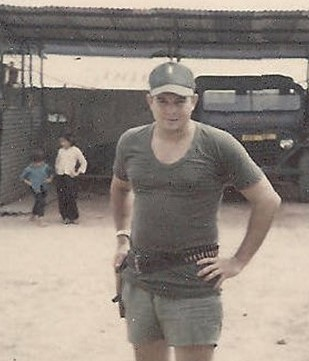
I served my time in the Mekong delta, and I can assure you that it was one huge swamp. As a result, we had all kinds of swamp critters that we had to contend with during my assignment there.
Mosquitoes were always an issue. During the monsoons they would swarm throughout the day between rainstorms. At night we would do our best to keep our sleeping areas controlled by using bug spray. Of course, 50 years later we found out that some of the bug spray that we were using was quite toxic and not just to the bugs. For example, if I got too much bug repellent on my hands and touched the plastic stock of my M16 rifle I could feel the plastic melting a little bit. Probably the Deet was working against the plastic. I’m sure that wasn’t a ‘skin conditioner’ that ‘Maybelline’ would highly recommend!

In the morning when you would wake up the first thing that you would do would be to roll your mosquito net up over your bunk as tightly as possible. Then you would spray the mosquito netting and hopefully kill anything that was still left inside. At night before you went to bed you would lower your mosquito net and tuck it underneath the bunk and spray the inside. That way anything that was inside of the net at that point would hopefully be killed with the insect spray. When you went to bed, we crawled in under the mosquito netting as quickly as possible and hopefully nothing came in with you.
Throughout the day when the mosquitoes were bad, we would use mosquito repellent. It came in a squeeze-bottle. When we were in the field wearing a helmet, we would put that little bottle of repellent inside the band that held our camouflage cover. If I was wearing a soft cap, I would usually try to carry an extra bottle in my pants pocket. Regardless, most of the year we tried to keep ourselves protected from the mosquitoes as best we could. But it was difficult.
When it was extremely hot and humid, which was almost always, the mosquito repellent would rinse off very quickly just due to the sweat rolling off your body. So regardless of how hard you tried to keep repellent on you were always subject to being bitten by mosquitoes.
We had another bug that we found to be quite bothersome. It was a small white moth. We had to make sure that we kept all our water containers covered, especially the water in the fire barrels near the compound. This moth would lay its eggs in the water and if you would splash it on to your body you would find the next day you had hundreds of little white pimples in the pores of your body. Some said that these were the eggs of that little moth. They would cause skin irritation that would itch terribly. There were a few salves that seemed to take care of, yet it never seemed to really go away.
Of course, if you would scratch it then you could come up with some other potential skin infections. Our medics tried several different types of salves and ointments to try to stop the itching, but it was difficult to do.
One of the other issues that we ran into, especially when we were working with the Vietnamese, something we called rice-lice. This was a type of body lice that seemed to hang out any place that were rice husks around. Like any louse they would dig into the skin and cause a lot of itching. Fortunately, there was a type of salve that the Vietnamese used that seemed to take care of most of it but for some reason it always seemed to be something that smelled like kerosene to me.
You did the best that you could to try to keep clean but considering that we were living on the economy, taking our bathwater right out of the dirty canal, and sweating profusely 24 hours a day keeping clean was difficult. Bathing in the water from the canal, which was always muddy, was a real treat. Who knows what else was floating in that water other than just mud. The Vietnamese had a series of privies built out over the canal and unfortunately it was upstream from where we would draw our water to bathe. We would treat our water with chlorine and I’m sure that helped some but for some reason you could never get all the mud out.
I can remember going to Saigon one time and spending the night in the Visiting Officers Quarters (VOQ). When you checked in you would be issued sheets, a pillow, a pillowcase, a wool blanket, a bath towel and a washcloth. The first time I went into Saigon and crawled out of the shower and wiped myself off with that nice white towel it was muddy colored, from all the mud washing out of my pores with clean water.
We also had issues with snakes, cobras being one of the worst. When I first was assigned to my province team before going down to the district level I stayed in the VOQ, which was basically a 10 by 12 room with two bunk beds in what we called the ‘splinter city’ portion of the compound. There were four officers in the VOQ room. We were all transient either coming in from our teams or heading out to our teams.
The first night that I was there I decided I was going to go down and take a shower. At least at the provincial level we had relatively clean water that was treated at a water filtration plant. It was highly chlorinated but at least it was hot and clean. As I was getting ready to head over to the shower room one of the captains that was staying with me in the room that night told me to be careful and watch out for a cobra in the shower room. He informed me that there was a shotgun hanging on the wall that was loaded just in case. It seems that the cobras would slither out of the swamps and they liked the shower room floor because it was damp and it was warm and it also attracted mice.
A cobra would lay right under the little step that we took that separated the latrine from the shower room. It was basically like stepping over a concrete block. It appeared that the cobras like to lie right underneath that block in the shower room area. The second night that I was there I heard a shotgun blast coming from the latrine and sure enough the next morning there was a cobra skin on the outside wall of the shower room. The Vietnamese women who worked there would collect those snakes and snake skins and take them home. In some cases, they would eat the snakes and other cases they would dry the skin and sell it.
One of the other kinds of wildlife that we had dealings with when I was at Ap Bac were geckos. The Vietnamese loved geckos. They would grow to be quite large, sometimes as big as one foot long. If our Vietnamese maid could catch them, she would slice off the tail and then turn the geckos loose. Evidently the tail would grow back, and the tail was a choice piece of meat to them. We would hear them chirping on the walls at night and at least they were helpful in the fact that they were eating mosquitoes. Occasionally one would fall off the ceiling and land on top of a wall locker with a big bang.
During the rainy season we really had a lot of trouble with snakes. They would always be looking for a dry place to get out of the water. Of course, so were the rats and the mice. Both the rodents and snakes were doing the same thing, and the snakes would then hunt the mice and the rats near our buildings. We rarely had an issue with poisonous snakes but the thought of a large boa constrictor swimming right outside of the window of the team house was a bit disconcerting.
But again, the Vietnamese enjoyed that. That was meat on the table and if it was a large boa or python, they would skin it and sell the skin in the marketplace.
When I was working up in I Corps one of the things we worried about most in the jungle was a small green snake called a bamboo viper. I saw a few of them while I was there, but I never had to worry about the snakes. The problem with the bamboo viper is the fact that they were deadly snakes, although I understand they were kind of hard to provoke. However, if you did get bit, they were very poisonous.
Other than the cobras, the deadliest snake that we ran into in the Mekong Delta was something called a karait snake. They used to call these snakes a two-step. Rumor had it that if you got bit you could take two steps before you would die. If you did get bitten, they injected a neurotoxin that was deadly. The Vietnamese referred to them as a two-step because it took two steps for them to bite you. The karait were like a coral snake in the United States, at least the ones we dealt with. They had a flattened tail and if you looked closely at it, you could see that there was a barb at the end of the tail that looked like it had a fishhook in it. While I never saw one bite, anyone allegedly the karait strikes with its tail first, imbeds the barb into the skin and then wraps around and chews on the wound to inject its poison.
So between rats and mice and snakes and mosquitoes and moths and all the other biting bugs that we had in Vietnam it doesn’t surprise me that we also suffered from a wide variety of tropical ailments. And that’s a story for another day
If you’re enjoying these blogs, please drop me a comment or if you have any questions that I might answer, submit a comment on the comment pages. I’m always glad to hear from you.
Again, please look at all my books that I have listed. They can be purchased from Amazon.com with the click of a button directly from my website,
The Advisor Series:
- “The Senior Army Instructor” (Available on Amazon ASIN: B0GSXJ2ZHC
- “The Advisor, Kien Bing, South Vietnam, 1969-1970. A Novel” (Available on Amazon ASIN: B09L4X5NQ3)
- “The Province Senior Intelligence Advisor, Kien Song Province 1970-1971; A Novel” (Available on Amazon ASIN: B0BHL2XCX5)
- “The Hardchargers,” Vietnam 1972-1973; A Novel” (Available on Amazon ASIN: B0C7SPR1JY
- “The Tuscarora Trail” (Available on Amazon ASIN: B0D3QY2GM6)
Leave a Reply